
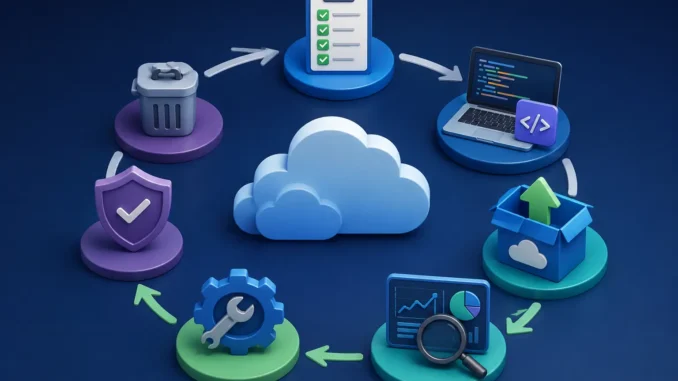
Cloud ALM is the structured process of planning, developing, deploying, monitoring, maintaining, and eventually retiring cloud-based applications throughout their lifecycle. As businesses increasingly depend on cloud technologies to support operations and customer experiences, managing applications efficiently has become critical. A well-defined Cloud Application Lifecycle Management strategy helps organizations reduce operational risks, improve performance, maintain security, and ensure continuous optimization.
Whether an organization develops cloud applications internally or uses enterprise cloud solutions, every application follows a lifecycle. The difference between successful organizations and struggling ones often comes down to how effectively that lifecycle is managed.
Why Cloud Application Lifecycle Management Matters
Modern cloud environments evolve continuously. User expectations change, technology advances rapidly, and business requirements rarely remain static. Without a proper lifecycle management strategy, organizations may face performance issues, deployment failures, security vulnerabilities, and rising maintenance costs.
Cloud Application Lifecycle Management provides a framework that enables teams to:
- Improve application quality and reliability
- Streamline deployments
- Reduce operational risks
- Increase visibility into application performance
- Support continuous improvement
- Manage updates with confidence
Many enterprise organizations now use lifecycle management frameworks to improve efficiency and reduce downtime across cloud ecosystems.
1. It Begins Long Before Any Code Is Written
The majority of individuals believe that Cloud ALM begins during the development phase. In actuality, it begins much earlier when a business need is recognized and the choice to develop or implement a Cloud application to meet it is made. Feasibility studies, requirement formulation, stakeholder alignment, and architectural planning are all included in this initial phase. The course of the entire lifecycle is determined by how well these foundations are built. One of the most frequent and expensive errors businesses make when implementing Cloud apps is to skip or accelerate this stage.
2. Development and Deployment Are Only the Middle of the Story
Development starts after architecture is planned and requirements are understood, however this is really only the middle part of a much longer journey. Cloud ALM guarantees that development adheres to established standards, that deployment is monitored and tested, and that the shift from a staging environment to live production is seamless in addition to well-managed. When deployment represents the beginning of the longest stage of an application’s life, continuous operation, and maintenance, along with continuous improvement, many teams view it as the end.
3. Monitoring Keeps the Entire Lifecycle Honest
The work doesn’t slow down after a Cloud application goes live. In fact, it enters a new phase of character. Ongoing monitoring is now the bloodstream of effective lifecycle management. Metrics related to security events, error rates, utilization patterns and performance need to be monitored and acted upon. Without proper monitoring, problems develop invisibly until they explode into catastrophic events. Cloud ALM views monitoring as a fundamental operational discipline that keeps applications robust, reliable, and healthy over the course of their active lives rather than as an optional extra.
4. Change Management Sits at the Heart of Long-Term Success
Cloud apps are always changing due to user input, market demands, regulatory changes, and technological advancements. One of the most crucial tasks that Cloud ALM carries out is systematic along with intentional management of these modifications. If not adequately planned, tested, and communicated, every update, and patch, in addition to new feature launches bears some risk. The program as well as the users who rely on it on a daily basis are safeguarded by effective change management inside the lifecycle framework, which guarantees that evolution occurs confidently rather than chaotically.
5. Retirement Is a Phase That Deserves Genuine Respect
Every Cloud service eventually approaches the end of its useful life, and how that conclusion is handled is far more important than most organizations realize. Inadequate application retirement can lead to stranded integrations, data loss, regulatory infractions, and serious disruptions to corporate operations. Cloud ALM applies the same methodical discipline to retirement as it does to all other stages.
Conclusion
Cloud application lifecycle management is more than simply a procedure; it’s an ongoing approach that establishes how effectively companies create, manage, and develop their applications. As cloud environments become increasingly complex, automation and intelligent lifecycle solutions are becoming more valuable. Platforms like Opkey help simplify lifecycle activities through AI-powered testing, change impact analysis, optimization capabilities, and intelligent automation. By reducing manual effort and improving decision-making, organizations can stay agile while maximizing the value of their cloud applications.
Frequently Asked Questions
Q: What is Cloud Application Lifecycle Management?
Cloud Application Lifecycle Management is the process of managing a cloud application’s complete journey—from planning and development to deployment, monitoring, maintenance, and retirement.
Q; Why is Cloud ALM important?
Cloud ALM helps organizations improve performance, reduce risks, streamline updates, and maintain application reliability over time.
Q: What are the major stages of Cloud ALM?
The major stages include planning, development, deployment, monitoring, maintenance, change management, and retirement.
Q: How does Cloud ALM improve business efficiency?
Cloud ALM improves visibility, minimizes downtime, supports automation, and ensures applications remain optimized throughout their lifecycle.
Also Read: What is a Ziptie AI Search Analytics? A Complete Guide for Beginners




Leave a Reply