
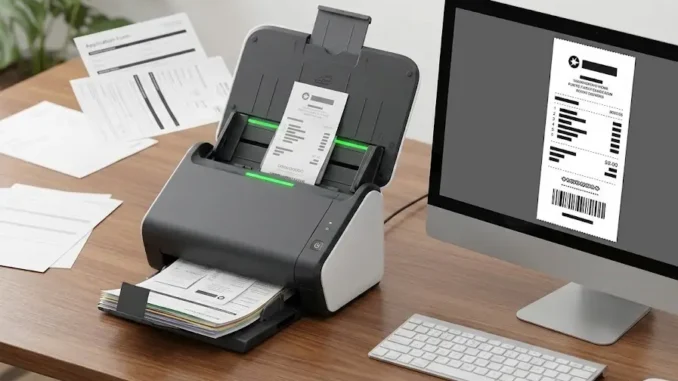
Managing receipts, invoices, expense records, and financial paperwork has become an essential part of both personal organization and business operations. Whether tracking tax deductions, managing reimbursements, organizing expense reports, or digitizing financial records, businesses and individuals increasingly rely on scanning technology to reduce paper clutter and improve accessibility. However, receipt management presents unique challenges because receipts are often crumpled, faded, unevenly sized, or printed on low-quality thermal paper that deteriorates over time.
A modern document receipt scanner is specifically designed to solve these challenges by creating clean, highly readable digital files optimized for organization and OCR processing. Instead of manually sorting stacks of receipts or struggling with unreadable scans, intelligent scanning technology helps users digitize financial documents quickly while improving clarity and searchability.
Receipt digitization has become especially valuable for small businesses, accounting professionals, freelancers, and remote workers who handle large volumes of expense documentation regularly. Digital receipt storage improves organization, simplifies tax preparation, and reduces the risk of losing important records over time. Scanned receipts can also be integrated into cloud storage systems, accounting software, and searchable document management platforms for easier long-term access.
Modern scanning systems are no longer limited to basic document capture. Advanced scanners now incorporate intelligent image processing, automatic cleanup tools, and OCR optimization features that significantly improve the quality and usability of scanned records. These technologies help transform damaged or difficult-to-read receipts into clean digital files that are easier to archive, retrieve, and process.
The demand for efficient scanning tools extends beyond receipts alone. Many professionals also use devices such as a picture scanner with feeder to digitize photos, records, invoices, and mixed document types while maintaining high image quality and efficient batch processing capabilities.
As digital organization becomes increasingly important across both home and business environments, modern scanning technology continues to play a critical role in improving productivity, reducing paper dependency, and simplifying records management.
Intelligent Image Cleanup That Enhances Faded Or Crumpled Receipts
Receipts are among the most difficult document types to digitize accurately because they often contain wrinkles, folds, faded print, stains, shadows, and inconsistent paper quality. Traditional scanning systems may struggle to capture these documents clearly, especially when thermal printing has begun to deteriorate over time.
Intelligent image cleanup technology helps solve this problem by automatically improving scan quality during the digitization process. Advanced scanning systems analyze each receipt individually and apply enhancements designed to improve readability while reducing visual imperfections that can interfere with OCR accuracy.
One of the most valuable features is automatic contrast adjustment. Faded receipts often contain light or uneven text that becomes difficult to read when scanned normally. Intelligent image processing tools increase text visibility by balancing brightness and contrast levels automatically, helping important information remain legible even on aging receipts.
Wrinkle and shadow correction also play a major role in improving image quality. Crumpled receipts may produce dark areas, uneven lighting, or distorted sections when scanned. Cleanup algorithms help smooth these inconsistencies, creating cleaner digital files without requiring manual editing afterward.
Background noise reduction is another important feature for receipt scanning. Thermal paper often produces grainy backgrounds, discoloration, or unwanted artifacts that make scanned images appear cluttered. Intelligent cleanup tools remove much of this visual noise while preserving the text and transaction details users need most.
Edge detection and automatic cropping further improve the quality of receipt scans. Receipts come in many shapes and sizes, and manually adjusting scan boundaries for every item can slow workflows significantly. Advanced scanners detect receipt edges automatically and crop images precisely to create clean, organized digital files with minimal user intervention.
These cleanup technologies are especially useful for expense management systems where readability and OCR accuracy directly affect workflow efficiency. Clean digital receipts help accounting software process transaction details more accurately while reducing the need for manual corrections and data entry.
Modern scanning systems also improve efficiency through automatic sorting, tagging, and cloud integration capabilities. Users can quickly digitize large batches of receipts and organize them into searchable digital archives that simplify expense tracking and long-term recordkeeping.
Optimized Output That Improves Text Recognition And Searchability
One of the most important benefits of modern receipt scanning technology is optimized OCR performance. OCR, or optical character recognition, allows scanned documents to become searchable and editable digital files rather than simple image captures. For receipts and financial records, this functionality dramatically improves organization and accessibility.
OCR accuracy depends heavily on image quality. Poor scans with faded text, shadows, wrinkles, or low contrast can reduce recognition performance and create indexing errors. Advanced scanners improve OCR reliability by optimizing scan output automatically before the document is processed by recognition software.
Sharp text rendering helps ensure transaction details, dates, totals, vendor names, and itemized purchases remain readable and searchable after digitization. Enhanced image clarity improves software recognition rates while helping users retrieve records quickly using keyword searches rather than manually reviewing files one by one.
Automatic orientation correction is another important feature. Receipts are often inserted into scanners at different angles or upside down during batch scanning. Intelligent scanning systems detect orientation automatically and rotate documents correctly without user intervention, creating consistent and organized digital output.
Blank page removal, color optimization, and multi-size batch scanning also contribute to more efficient workflows. Users can scan mixed receipts and documents together while the scanner automatically separates, adjusts, and processes files appropriately.
Cloud connectivity further expands the value of digital receipt management. Modern scanning platforms allow users to upload files directly to cloud storage systems, accounting applications, or shared document repositories where records remain accessible across devices and locations.
Many users also appreciate the versatility of a high-performance scanner capable of handling not only receipts but also contracts, invoices, photos, IDs, business cards, and everyday paperwork within a single workflow. This flexibility helps reduce equipment needs while supporting more streamlined digital organization.
As businesses and individuals continue reducing paper clutter and transitioning toward digital records management, receipt scanning technology has become an increasingly important productivity tool. Clean, OCR-ready digital files improve accessibility, reduce manual data entry, and simplify long-term financial organization.
Ultimately, modern document receipt scanners are designed to do far more than simply capture images. Through intelligent image cleanup, advanced OCR optimization, and automated workflow tools, today’s scanning systems help users create highly readable, searchable digital records that improve efficiency, organization, and long-term document accessibility.
Also Read: What Is a Server Rack?


Leave a Reply