
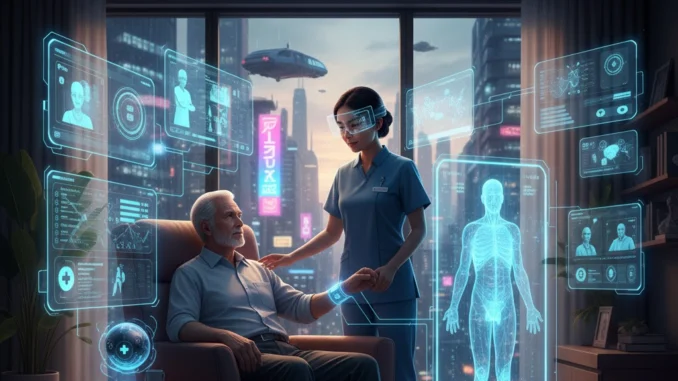
The global healthcare ecosystem is undergoing a monumental paradigm shift. For decades, high-acuity medical care, continuous physiological monitoring, and specialized treatment were strictly confined within the physical walls of hospitals, clinics, and long-term care facilities. Today, a convergence of high-speed telecommunications, artificial intelligence, miniaturized biosensors, and digital health platforms is decentralizing medicine—shifting the primary center of care directly into the patient’s home.
Driven by an aging global population, the rising burden of chronic disease, overburdened clinical staff, and rising hospital operational costs, at-home healthcare technology is no longer just a convenient alternative for minor consultations; it is becoming a fully integrated, high-tech extension of modern acute care. Advanced technological infrastructures now allow medical teams to deliver hospital-level interventions, predict acute physiological decompensation before symptoms appear, and empower patients to manage complex health conditions safely within their daily lives.
Key Industry Insight: Next-generation at-home care transcends basic video calls with a physician. It represents a interconnected ecosystem of continuous remote physiological monitoring, AI-driven predictive analytics, smart drug delivery systems, and real-time emergency response networks that match or exceed traditional bedside monitoring accuracy.
1. Key Drivers Accelerating the Shift to Technology-Enabled At-Home Care
Several macro-economic, demographic, and technological forces are converging to drive rapid adoption of advanced home-based care models globally:
A. Demographics and the Chronic Disease Burden
Populations across developed nations are aging rapidly. According to global health data, the proportion of individuals over age 65 is reaching historic highs. Concurrently, chronic health conditions—such as Congestive Heart Failure (CHF), Chronic Obstructive Pulmonary Disease (COPD), Type 2 Diabetes, and hypertension—are rising. Managing these long-term conditions using traditional, episodic clinic visits often leads to delayed interventions and emergency room visits. Continuous at-home monitoring provides an ongoing feedback loop that stabilizes chronic patients before critical health events occur.
B. Hospital Bed Capacity Constraints and Staff Shortages
Health systems worldwide are experiencing acute shortages of clinical staff, nurses, and open bed capacity. The cost of building and maintaining physical hospital infrastructure continues to climb. Expanding “Hospital-at-Home” (HaH) initiatives allows health systems to scale bed capacity virtually, lowering cost per bed while preserving physical hospital space for surgical, traumatic, and intensive care cases.
C. Technological Convergence and 5G Connectivity
Earlier attempts at home monitoring were hampered by unreliable internet, bulky hardware, and complicated user interfaces. The advent of low-power Bluetooth Low Energy (BLE) biosensors, ultra-reliable 5G/satellite connectivity, and cloud-native health data infrastructure enables secure, continuous streaming of clinical-grade biometric data without requiring complex setup by elderly patients.
2. Core Pillars of Next-Generation At-Home Medical Technology
Modern technology-enabled home care relies on integrated technologies working together seamlessly. Below is a breakdown of the structural components forming the modern home care matrix:
| Technology Pillar | Primary Hardware / Software | Clinical Value Delivered |
|---|---|---|
| Remote Patient Monitoring (RPM) | Smart ECG patches, continuous glucose monitors (CGM), digital cuffs, pulse oximeters | Continuous streaming of vital signs to centralized clinical monitoring dashboards. |
| Artificial Intelligence & Predictive Analytics | Machine learning algorithms, anomaly detection models, natural language processing (NLP) | Detects subtle biomarker trends to flag decompensation days before clinical events. |
| Smart Home Ambient Sensing | Radar sensors, floor pressure mats, smart cameras, acoustic fall-detection units | Passive, non-invasive tracking of mobility, gait, sleep quality, and emergency fall detection. |
| Targeted Robotics & Automation | Robotic mobility exoskeletons, automated pill dispensers, robotic companion units | Assists with physical therapy mobility, prevents medication errors, and aids daily tasks. |
| Hospital-at-Home (HaH) Logistics | Mobile diagnostic ultrasound, point-of-care (POC) blood analyzers, IV delivery platforms | Enables acute treatments (IV antibiotics, blood work, imaging) directly inside the residence. |
3. Advanced Bio-Sensing and Next-Gen Wearables
The first generation of consumer wearables measured basic step counts and estimated heart rates. The current and upcoming generations of medical-grade biosensors represent a giant technological leap forward, bringing diagnostic accuracy directly to wearable form factors.
A. Continuous Multiparameter Biosensor Patches
Subtle, adhesive chest patches now act as full single- or multi-lead ECGs, continuous respiratory rate monitors, core body temperature trackers, and fluid status indicators. Using bioimpedance spectroscopy, these patches measure pulmonary fluid accumulation in patients with heart failure, allowing physicians to adjust diuretic medication dosages remotely before fluid fills the lungs, preventing emergency hospital admissions.
B. Non-Invasive Biomarker Monitoring
Continuous Glucose Monitoring (CGM) revolutionized diabetes care by eliminating daily finger-prick blood tests. Researchers and medical device engineers are now expanding transdermal and optical sensing technologies to monitor additional key biomarkers non-invasively, including lactate levels, interstitial alcohol, cortisol (stress indicators), and blood pressure without an inflatable cuff.
C. Smart Textiles and Wearable Micro-Electronics
Integration of conductive threads and micro-sensors into everyday clothing allows continuous physiological monitoring without requiring conscious effort from the patient. Smart garments can track posture, muscle activation for stroke rehabilitation, joint range of motion, and early signs of neurological tremors.
4. The Role of Artificial Intelligence and Predictive Analytics
Continuous biosensors generate immense streams of raw physiological data. Without intelligent filtering, clinical teams face “alert fatigue”—sifting through millions of data points to find actionable signals. Artificial Intelligence (AI) acts as the central brain of modern at-home healthcare processing.
How AI Transforms Raw Home Health Data into Clinical Action:
- Predictive Early Warning Scores (EWS): Machine learning algorithms evaluate historical baseline data against real-time vital sign trends, calculating risk scores that alert nurses to subtle physiological deterioration up to 48 hours before an acute event.
- Personalized Baseline Modeling: Instead of relying on static, population-wide standard health ranges, AI algorithms establish individual baseline profiles for each patient, accounting for age, medication usage, and chronic conditions to reduce false positive alerts.
- Conversational Voice Assistants and Virtual Triage: Generative AI and NLP-driven voice bots conduct daily check-ins, asking natural questions regarding symptom changes, medication adherence, and side effects, escalating concerning responses directly to care managers.
- Automated Computer Vision Analysis: Patients can capture smartphone images of surgical wounds, skin lesions, or diabetic foot ulcers. AI computer vision models evaluate healing trajectories, measuring wound margins and detecting early signs of surgical site infections.
5. Ambient Intelligence and Passive Home Monitoring
One major limitation of earlier medical technology was requiring elderly or cognitively impaired patients to remember to wear devices, charge batteries, or manually log readings. Modern home care is moving toward Ambient Intelligence—passive, invisible monitoring built into the home environment itself.
A. Radar, LiDAR, and Radio-Frequency (RF) Sensing
Wall-mounted radar and RF sensors bounce safe high-frequency waves off room surfaces, creating a high-resolution map of movement without using invasive optical cameras. These sensors detect chest micro-movements to measure breathing rates and heart rate patterns while someone sleeps. Furthermore, RF systems track exact body position in space, detecting sudden falls instantly and contacting emergency services even if the patient is unconscious.
B. Gait Analysis and Cognitive Decline Tracking
Passive sensors embedded in flooring, doorways, and smart home lighting track daily mobility patterns over weeks and months. Changes in walking velocity, stride length, night-time wandering, or frequent trips to the bathroom provide quantifiable clinical data indicating urinary tract infections (UTIs), medication side effects, or progressive cognitive decline associated with Alzheimer’s and dementia.
6. “Hospital-at-Home” (HaH): High-Acuity Medical Care at the Bedside
While Remote Patient Monitoring focuses on long-term chronic disease maintenance, Hospital-at-Home (HaH) models provide treatment for acute, complex illnesses that traditionally required physical admission to a hospital bed. Patients suffering from acute pneumonia, cellulitis, uncomplicated heart failure exacerbation, or post-surgical recovery are treated safely inside their homes.
A fully realized Hospital-at-Home platform relies on synchronized logistics, mobile diagnostics, and rapid emergency response protocols:
- Point-of-Care (POC) Mobile Diagnostics: Visiting nurses carry handheld ultrasound devices (POCUS), point-of-care blood chemistry analyzers (providing complete metabolic panels and blood gas results within minutes), and digital stethoscopes that stream audio to off-site cardiologists.
- Smart Infusion and Drug Delivery Systems: Programmable, cloud-connected ambulatory infusion pumps deliver intravenous (IV) antibiotics, chemotherapy, or cardiac medications according to precise schedules set remotely by hospital pharmacists.
- Integrated Mobile Care Teams: High-tech command centers staffed 24/7 by acute care physicians oversee dozens of home-admitted patients simultaneously, dispatching paramedics, mobile X-ray technicians, or physical therapists to the home within hours when needed.
7. Challenges, Security Considerations, and Systemic Barriers
Despite the clear clinical and financial benefits, broad deployment of advanced at-home healthcare technology faces significant operational, regulatory, and technical hurdles:
A. Data Privacy, Cybersecurity, and Regulatory Compliance
Streaming sensitive medical data continuously from residential Wi-Fi networks creates expanded attack vectors for cybercriminals. Protecting patient health data under strict regulations—such as HIPAA in the United States or GDPR in Europe—requires end-to-end encryption, secure device authentication protocols, and robust cloud infrastructure to prevent unauthorized access or ransomware attacks on medical hardware.
B. The Digital Divide and Health Equity
Advanced home care technologies rely heavily on stable high-speed broadband and digital literacy. Rural populations, low-income households, and elderly individuals living alone may lack cellular coverage or struggle to interact with digital touchscreens. Health systems must design intuitive interfaces and ensure cellular-connected gateway hubs are provided directly to patients to prevent widening healthcare disparities.
C. Interoperability and Electronic Health Record (EHR) Integration
For home medical technology to be effective, biosensor data must flow directly into primary care and hospital Electronic Health Record systems (such as Epic, Cerner, or Athenahealth) using standardized data frameworks like HL7 FHIR (Fast Healthcare Interoperability Resources). Isolated digital health platforms that fail to communicate with primary hospital systems create fragmented care records.
8. The Future Outlook: What the Next Decade Holds
Looking ahead over the next decade, the convergence of emerging technologies will continue to expand what can be safely accomplished in home settings:
- Digital Twins for Personalized Therapeutics: AI algorithms will create real-time “digital twin” models of a patient’s cardiovascular or metabolic system using continuous home sensor data. Physicians can run virtual simulations of potential drug treatments on the digital twin before administering them to the patient.
- Autonomous Drone Delivery for Medical Supplies: Medical drone networks will deliver prescription medications, emergency blood products, and laboratory collection kits directly to suburban and rural residences within minutes of a physician order.
- Generative AI Health Coaches: Hyper-personalized, empathetic AI coaches will work with patients daily, adjusting meal plans based on real-time glucose responses, providing cognitive behavioral therapy (CBT) exercises, and keeping care teams informed automatically.
Frequently Asked Questions (FAQs)
Basic telehealth relies primarily on video or audio consultations between a patient and a doctor. Remote Patient Monitoring (RPM) involves clinical-grade biosensing hardware that continuously captures, streams, and analyzes objective physiological data (such as ECG, oxygen saturation, blood pressure, and weight) independently of video appointments.
Numerous clinical studies published in major medical journals show that properly managed Hospital-at-Home care achieves lower 30-day readmission rates, fewer hospital-acquired infections, reduced mortality rates, and significantly higher patient satisfaction scores compared to traditional hospital stays for eligible acute conditions.
Advanced at-home health platforms feature multi-layered emergency protocols. AI algorithms and central clinical monitoring hubs detect acute physiological spikes or drop-offs immediately. If a critical threshold is breached, the system alerts on-call clinicians, automatically contacts local emergency medical services (EMS), and shares exact location and biomarker data with responding paramedics.
Reimbursement frameworks are expanding rapidly. Healthcare payors recognize the cost savings and clinical efficacy of home-based care. Programs like CPT reimbursement codes for RPM and chronic care management, along with dedicated Hospital-at-Home waivers, allow health systems to be reimbursed for acute home care services.
9. Summary: Reimagining the Home as the Heart of Modern Healthcare
The integration of future healthcare technology into home environments marks a major shift in how modern medicine is delivered. By shifting from reactive, facility-centered care to proactive, continuous, technology-driven home care, the medical industry is building a more resilient, scalable, and patient-centered framework.
By bringing together bio-sensing wearables, predictive artificial intelligence, non-invasive ambient monitoring, and mobile diagnostic care teams, future health technology transforms the home from a passive recovery space into an active digital care facility. This evolution improves clinical outcomes, reduces medical expenditures, and restores independence and dignity to patients managing complex health conditions worldwide.

Leave a Reply